
“Excercise should be fun”
Peter Blomstrand has been appointed professor at the School of Health and Welfare at Jönköping University. He has a long career in both healthcare and academia, with research spanning from cardiovascular diagnostics to the relationship between physical activity, learning, and cognitive function.
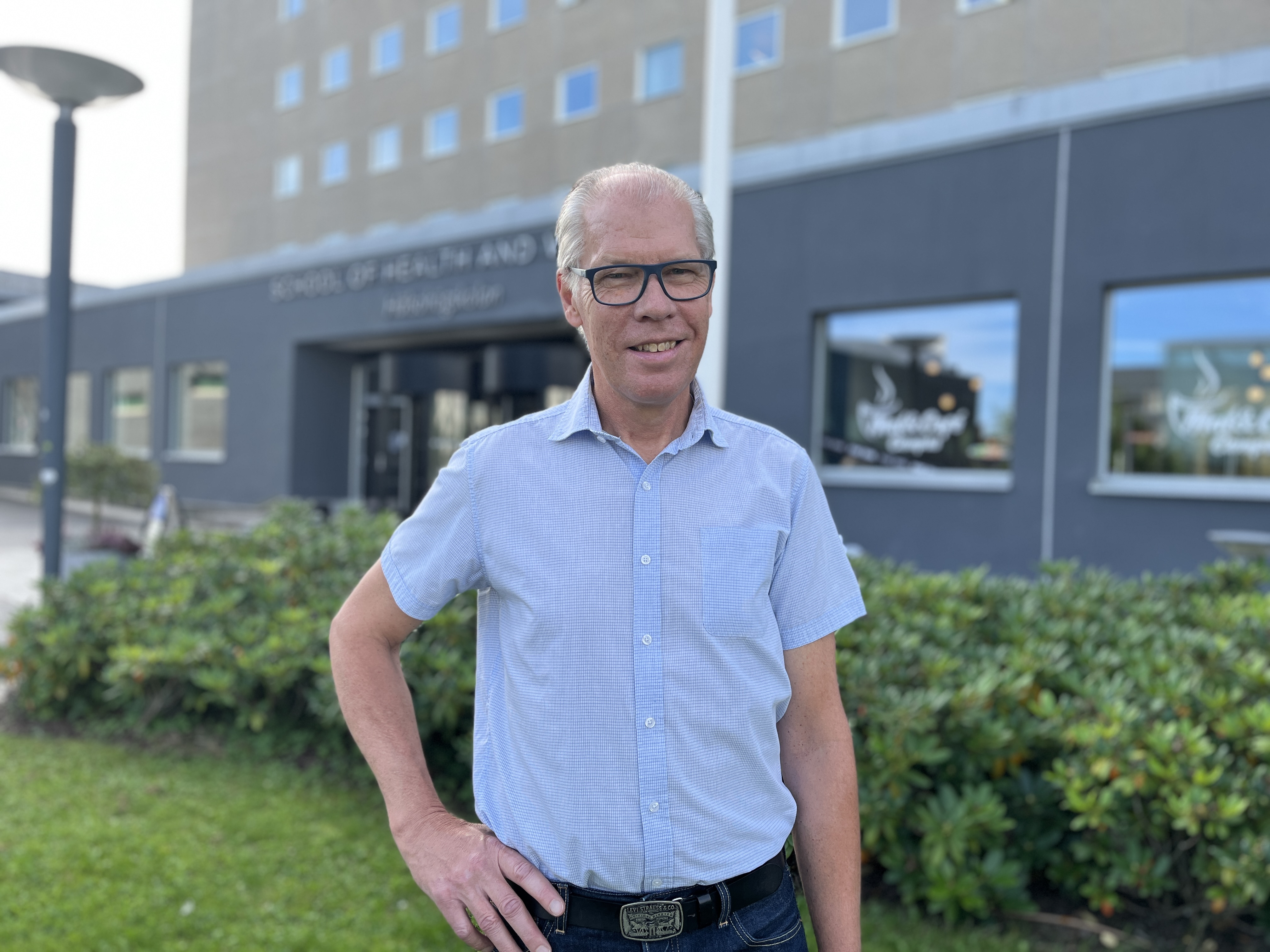
Peter Blomstrand began his academic career at the School of Health and Welfare in 2015, when he was appointed associate professor and senior lecturer. His path to this position has been marked by a lifelong commitment to healthcare, which began at a young age.
He grew up in Jönköping and studied medicine at the universities of Kiel and Linköping. Peter received his medical degree in 1986, followed by a house officer position in Norrköping and specialist training at Linköping University Hospital.
In 1994, he moved back to Jönköping to take a senior physician position in clinical physiology. The following year, he earned his doctorate and simultaneously became the clinic’s director - a role he held for 18 years.
“As a manager, I became interested in patient safety. I later took a position as chief medical officer at Ryhov County Hospital and also served as a technical assessor at SWEDAC, a government agency responsible for quality assurance in both the business sector and healthcare. “In 2015, I became an associate professor at Jönköping University and was appointed to a lectureship at the School of Health Sciences. In 2021, I also became an associate professor at Linköping University,” says Peter Blomstrand.
Peter Blomstrand conducted research in several areas with a clear connection to cardiovascular disease.
“I had the privilege of working early on in a very successful research group led by Professor Lars Wallentin from Uppsala. We conducted several groundbreaking studies on the diagnosis and treatment of ischemic heart disease,” says Peter.
Exercise has a positive impact on learning
Peter Blomstrand has, among other things, researched how physical activity in young adults can contribute to better cognitive function and learning. The studies attracted significant international interest. He also received a great deal of attention for his umbrella review on how older adults can similarly improve their cognitive functions through exercise.
“Our results surprised many, as it turned out that mind-body exercises—which include yoga—were the form of exercise that had the best, most positive cognitive effect on older adults,” says Peter.
At the School of Health and Welfare, he is a teacher at the biomedical analyst program with a focus on clinical physiology - a program he views as crucial for the future supply of healthcare professionals.
“As an operations manager, I struggled to recruit staff for a few years. This led to healthcare backlogs and suffering patients. During those years, the program didn’t exist at the School of Health Sciences. I approached the dean at the time and asked her to establish the program, which she did. It’s incredibly important that healthcare and academia collaborate and support each other. That lays the foundation for quality healthcare, he says.
“Forget the clock and rushing”
Peter Blomstrand has a keen interest in exercise, which was sparked when he was a young resident and saw how severely both young and older people - and their families - could be affected by cardiovascular disease. He saw a great need to spread information about the importance of living healthily, exercising regularly, eating right, and avoiding tobacco and other habits that lead to cardiovascular disease.
"We who work in healthcare also need to lead by example. I started exercising, and since then I’ve gone on many bike rides, ski trips, and runs in the forests around Bankeryd, where my family and I live. I believe in regular and varied exercise. Forget about the clock and rushing. Exercise should be fun. If your body isn’t cooperating one day, lower your expectations and go for a walk,” says Peter.


